
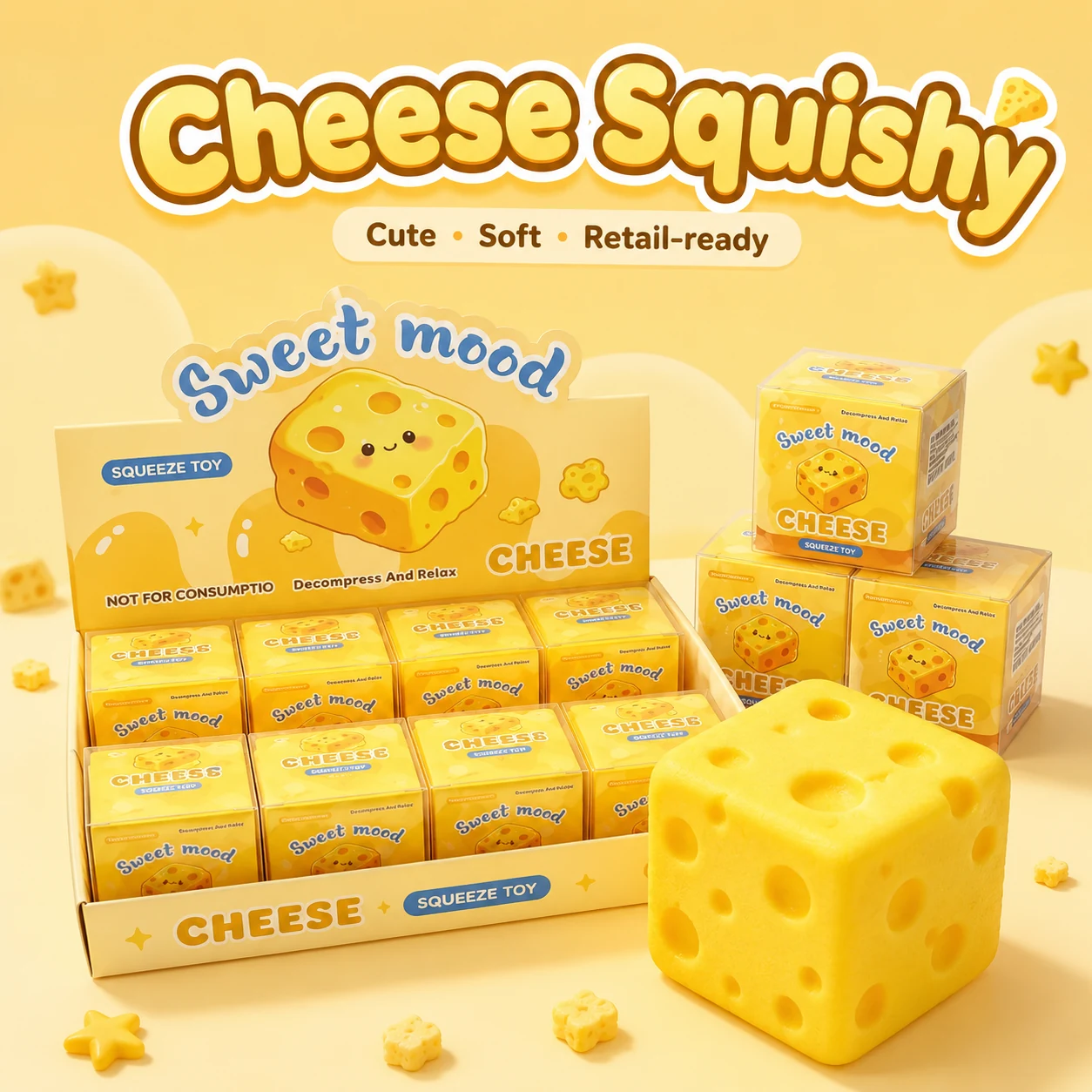
A squishy toy display box is not only packaging. For a wholesale buyer, it is part of the merchandising system: it determines how many units sit on the counter, how the assortment looks when opened, how much shelf space is used and how much shipping volume the retail presentation adds.
The most common mistake is approving an attractive display image before confirming the practical numbers behind it. A useful display-box specification needs the unit count, product orientation, color or style ratio, finished dimensions, board or material choice, printing, barcode position, inner packing and master-carton arrangement.
Define where the display will be used
Start with the retail fixture. A checkout counter, shelf, hanging area and floor display create different packaging requirements.
For a small counter display, the buyer usually wants a compact footprint, easy product access and enough front-facing artwork to explain the product. A shelf-ready tray may need a lower front wall so the toys remain visible. A closed retail box is different again: each product is a separate selling unit rather than an open assortment.
Measure the intended space before approving the display. Record:
- Maximum width
- Maximum depth
- Maximum height
- Whether the display must fit under a shelf
- Whether customers remove units from the front or top
- Whether the box will be refilled
Packed dimensions matter more than product-only dimensions for this decision. If you are still comparing packaging formats, review the custom squishy toy packaging guide first.
Confirm the display unit count and assortment ratio
A display box should have a written unit count. “One display” is not enough because similar boxes can hold different quantities depending on product size and orientation.
If the display contains multiple colors or characters, write the exact ratio into the quote and purchase order. For example, a 24-piece display could be twelve units of two styles, six units of four colors, or another custom ratio. The visual balance can change significantly even when the total quantity stays the same.
Ask for:
- Units per display
- Number of styles/colors
- Quantity per style/color
- Whether the ratio is fixed or can be customized
- Whether mixed displays are packed at the factory
- Number of displays per master carton
For mixed assortments, the mixed-SKU wholesale order guide helps separate product variety from carton control.
Use a physical mock-up before printing a large quantity
A dieline on a screen cannot fully show how the toys will sit inside the finished display. Whenever possible, review a blank or digitally printed mock-up with the actual product size before a larger printed packaging order.
Check whether:
- The product stays upright during normal handling
- The opening is large enough for easy removal
- The box walls support the product without crushing it
- The front panel does not hide important product features
- The display remains stable when some units have been sold
- The lid or header folds into the intended merchandising position
If a product is heavy or gel-filled, display stability deserves extra attention. If the item is soft and easily deformed, dividers or the orientation of the product can matter.
Separate product MOQ from printed-box MOQ
The minimum quantity for the toy and the minimum quantity for custom printed packaging may be different. Buyers often discover this only after artwork is finished.
A current stock item might be available at a relatively low test quantity while a custom printed display requires a larger run from the packaging supplier. In that case, a practical first order may use a standard display plus a branded label, sticker or insert, then move to a fully printed box after sales volume is proven.
Do not assume a packaging MOQ from another product. Box size, printing method, paperboard and supplier all affect the requirement. The article on custom squishy toy packaging cost explains which variables should be quoted separately.
Make the artwork work at retail distance
A display is viewed from farther away than a product label. The front panel should communicate the product quickly without relying on very small text.
For private-label packaging, keep the visual hierarchy simple:
- Brand or product family
- Product image or visible product
- Main product name
- Required warnings, age grading and importer/manufacturer information as applicable
- Barcode or retail data in a practical scanning location
Avoid placing critical information on a panel that will be folded behind the display during use. Ask for a photo of the assembled display with artwork applied before final approval.
The private-label pre-production checklist can be used to connect artwork approval with the product and package specification.
Calculate freight from the finished display, not the flat box
Display packaging can increase freight volume even when the empty box itself is light. A larger selling unit can reduce the number of products that fit into each master carton.
Before comparing two packaging concepts, request:
- Finished display dimensions
- Display gross weight with products
- Displays per master carton
- Master carton dimensions
- Master carton gross and net weight
- Total carton count for the order
Then compare landed cost rather than only unit packaging cost. A low-cost display can become expensive if it increases dimensional weight or ocean-freight volume significantly. The carton and shipping cost guide shows how to organize those inputs.
Review the display as part of the sample approval
Packaging approval should happen before bulk packing, not after production is complete. The approved selling unit should include the actual toy, the correct assortment, the intended label/artwork and the same packing method planned for production.
Photograph the approved display from the front, sides, top and packed-carton position. Record the approved unit count and display version. If the buyer later changes the number of pieces per display, treat it as a specification change because the carton count, weight and freight plan can also change.
The sample approval workflow provides a useful structure for locking the final reference before production.
Use display boxes for products that benefit from comparison
Display boxes are especially useful when several colors or characters are intended to be seen together. Food shapes, cubes, seasonal characters and collectible variations can be easier to merchandise as a grouped display than as isolated units.
Ruiwo Toys currently has selected products that use display-style packaging. Examples can be found in the wholesale squishy toy collection. Packaging shown on a product page is a reference to the current SKU and still needs to be confirmed in the quotation.
If you want a display box, send Ruiwo Toys the product link or SKU, target units per display, total quantity, target market and whether you need standard or custom branding. That information is enough to start a practical packaging quote.