
Finding a factory that can make a sample is only the beginning of a custom squishy toy project.
The more difficult question is:
Can the approved product be reproduced consistently when the order moves into bulk production?
For an importer, distributor, private-label brand or online seller, the value of factory-controlled production is not only the ability to manufacture a toy.
It is the ability to keep the approved product, artwork, packaging, quantity, quality checks and shipment records connected throughout the order.
Ruiwo Toys operates as a China source manufacturer and publicly describes its factory role as leading product development, sample approval, production planning, bulk production and quality control for wholesale squishy toy orders.
This guide focuses on what happens after the custom sample is approved.
Buyer note: The exact production route, MOQ, tooling, material, testing, quality plan and schedule vary by product and destination market. The approved sample and written order specification should define the production basis.
The approved sample should become the production reference
A custom project may begin with a drawing, image or idea.
Bulk production should not.
Before production is released, the buyer and factory should have an approved physical product and a written specification that identify the final version.
The production reference can include:
- development code or SKU;
- approved physical sample;
- product photos;
- dimensions;
- unit weight;
- material or filling;
- color;
- decoration;
- logo;
- packaging;
- barcode or label data;
- assortment ratio.
This turns an informal custom project into a repeatable manufacturing record.
The Ruiwo Toys sample and order process separates product, packaging, carton and shipment approvals so the buyer knows what is frozen at each stage.
Why production control starts before the production line
Many bulk problems are actually approval problems.
If the buyer has not clearly approved the:
- final size;
- final color;
- final filling;
- final artwork;
- final package;
- final assortment;
the factory is forced to make decisions during production.
That increases ambiguity.
A better process freezes the key decisions first and then releases production against the approved version.
For custom buyers, this is one of the biggest advantages of working with a factory-managed workflow.
Factory control point 1: product identity
The order should identify exactly what is being produced.
Avoid a purchase order that says only:
“500 custom squishies.”
A stronger order record includes:
- product/development code;
- product name;
- approved sample version;
- quantity;
- size;
- style/color mix;
- packaging version.
This makes later production, inspection and reorder discussions easier.
Factory control point 2: approved color and decoration
Small visual changes can affect brand consistency.
For custom products, record the approved direction for:
- main body colors;
- eyes and facial details;
- printed graphics;
- logo;
- glitter or decorative elements;
- surface finish.
If a product has several variants, record each variant separately rather than treating the entire order as “mixed colors.”
The goal is not to make every handmade or decorated item mathematically identical.
The goal is to create an agreed reference that can be used during production and inspection.
Factory control point 3: material and tactile experience
A squishy toy is a tactile product.
Appearance alone does not define it.
The bulk product should be compared with the approved sample for important physical characteristics such as:
- squeeze resistance;
- softness;
- recovery;
- overall feel;
- filling behavior;
- approximate unit weight where relevant.
Do not accept a substitution simply because it looks similar in photographs.
If a material or filling changes, ask whether the sample, testing, packaging or commercial quotation must be reviewed again.
Factory control point 4: packaging approval
Custom packaging should be treated as part of the selling unit.
Before bulk packing begins, confirm:
- package type;
- artwork version;
- logo;
- barcode;
- labels;
- required market information;
- product orientation;
- inserts;
- style ratio;
- packed unit dimensions.
Packaging can change carton efficiency and freight cost, so carton data should be confirmed after the final packaging version is known.
Use the Ruiwo Toys custom packaging cost guide when comparing packaging options.
Factory control point 5: production version control
A custom project can produce many files.
There may be:
- V1 product drawing;
- V2 revised drawing;
- V3 sample;
- V4 approved sample;
- packaging artwork A;
- revised packaging artwork B;
- final barcode file.
If these files are not controlled, the wrong version can enter production.
A clean production release should identify the final file names or version numbers.
Any later change should create a new controlled version.
This is especially important for repeat orders months later.
Factory control point 6: bulk quality checks
Quality control should compare production with the approved sample and specification.
Useful inspection points may include:
- correct product;
- correct version;
- major dimensions;
- surface condition;
- decoration placement;
- color direction;
- squeeze behavior;
- obvious filling inconsistency;
- packaging condition;
- assortment ratio;
- quantity.
The exact quality plan depends on the product and order.
Ruiwo Toys publishes a quality-control checklist and a more detailed buyer inspection guide for connecting sample approval with shipment checks.
Factory control point 7: carton and shipment data
The custom product is not commercially complete when the individual toy is finished.
The buyer still needs freight-ready information.
After the final packing method is confirmed, record:
- pieces per carton;
- carton dimensions;
- gross weight;
- total carton count;
- carton marks;
- packing-list quantities.
This information supports freight planning and helps the buyer compare the shipment with the purchase order.
If packaging changes, carton data may also change.
Do not reuse old carton data automatically.
Why factory-managed production reduces communication layers
Custom orders create many operational questions:
- Has the final sample been approved?
- Which artwork is current?
- Did the color change?
- Which packaging file is final?
- Is the assortment ratio correct?
- When does production start?
- What will QC check?
- What are the final carton dimensions?
When the project is managed through one factory team, these questions can be connected to the same order record.
Ruiwo Toys states that buyers work through one Ruiwo Toys team and that the company remains responsible for production control, buyer communication and delivery within its factory-managed order workflow.
This does not eliminate the need for written approvals.
It makes the approval path clearer.
Real factory evidence is part of supplier verification
Before committing to a custom order, buyers should verify that the supplier's factory claims are supported by evidence.
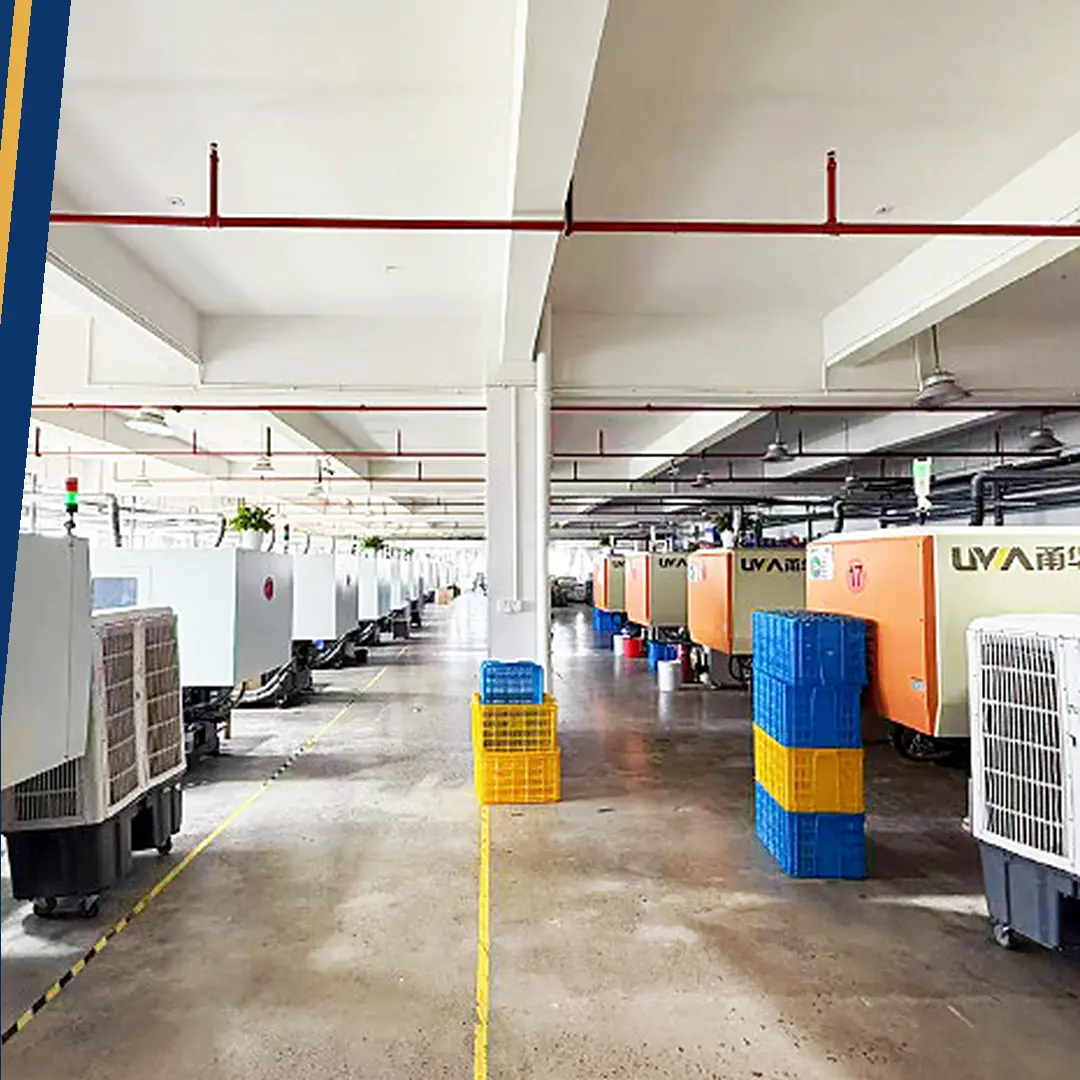
Ruiwo Toys publishes real factory photos and video showing the working environment, processing areas, equipment, sample area and finished-goods environment.
Public facts currently shown on the website include:
- established in 2017;
- 50+ employees;
- OEM / ODM support;
- real factory media supplied by Ruiwo Toys.
These facts do not replace project-specific sample approval or inspection.
They help the buyer verify the supplier environment before investing in development.
Why the first bulk order should create a reorder file
A custom product becomes more valuable when it can be reordered without restarting the entire development process.
After the first successful order, retain:
- final SKU or development code;
- approved sample photos;
- final dimensions;
- product weight reference;
- material/filling description;
- color references;
- artwork;
- packaging files;
- barcode;
- carton information;
- quality notes;
- last quotation reference.
Before a reorder, ask whether any product, material, packaging or production detail has changed.
If something changed, reapprove it before production.
Production control is especially important for private-label brands
For a generic stock item, a small visual variation may be inconvenient.
For a private-label product, the same variation can affect:
- brand presentation;
- product photography;
- packaging fit;
- customer expectations;
- barcode/SKU management;
- retailer acceptance.
That is why a branded product needs stronger version control than a casual sample order.
The private-label pre-production checklist helps buyers connect brand files with the product and production record.
Questions to ask before releasing bulk production
Before telling the factory to proceed, ask:
- Which physical sample is the approved production reference?
- Which product specification version is final?
- Which artwork and packaging files are final?
- What quantity and assortment ratio are being produced?
- Which changes occurred after the last quotation?
- What quality checks will compare production with the approved version?
- When will final packing and carton data be confirmed?
- What evidence will be available before shipment?
- How will this version be identified for the next reorder?
If any answer is unclear, resolve it before production rather than during production.
What to send Ruiwo Toys for a custom production review
If you already have an approved design or sample, send:
- product reference;
- target quantity;
- approved or target dimensions;
- color/style requirements;
- material/filling direction;
- logo/artwork;
- packaging specification;
- destination country;
- target receiving date.
Ruiwo Toys can review whether the project is ready for sample confirmation, packaging work or a bulk production quotation.
From approved sample to repeatable bulk order
Factory-controlled custom production is not one step.
It is a connected chain:
Approved Sample → Production Specification → Artwork → Packaging → Bulk Production → QC → Carton Data → Shipment → Reorder Record
The stronger this chain is, the easier it becomes for a buyer to scale a custom product.
Ruiwo Toys supports OEM and ODM squishy toy projects for B2B buyers and provides real factory evidence, sample-first approval and factory-managed production control.
Start an OEM / ODM project · See real factory proof · Review quality control
Custom project path: factory proof, sample approval and quote
Use the same four pages throughout the project so the custom-product brief, factory evidence, sample approval and quotation stay connected:
Custom Squishy Toys → Ruiwo Toys Factory → Sample & Order Process → Request a Custom Quote
If you are still comparing physical products before finalizing a custom specification, use the Squishy Toy Sample Box first.