
Read this article in another language
Links refer to this article. Existing localized editions may differ from the source. Unavailable languages are not translated pages.
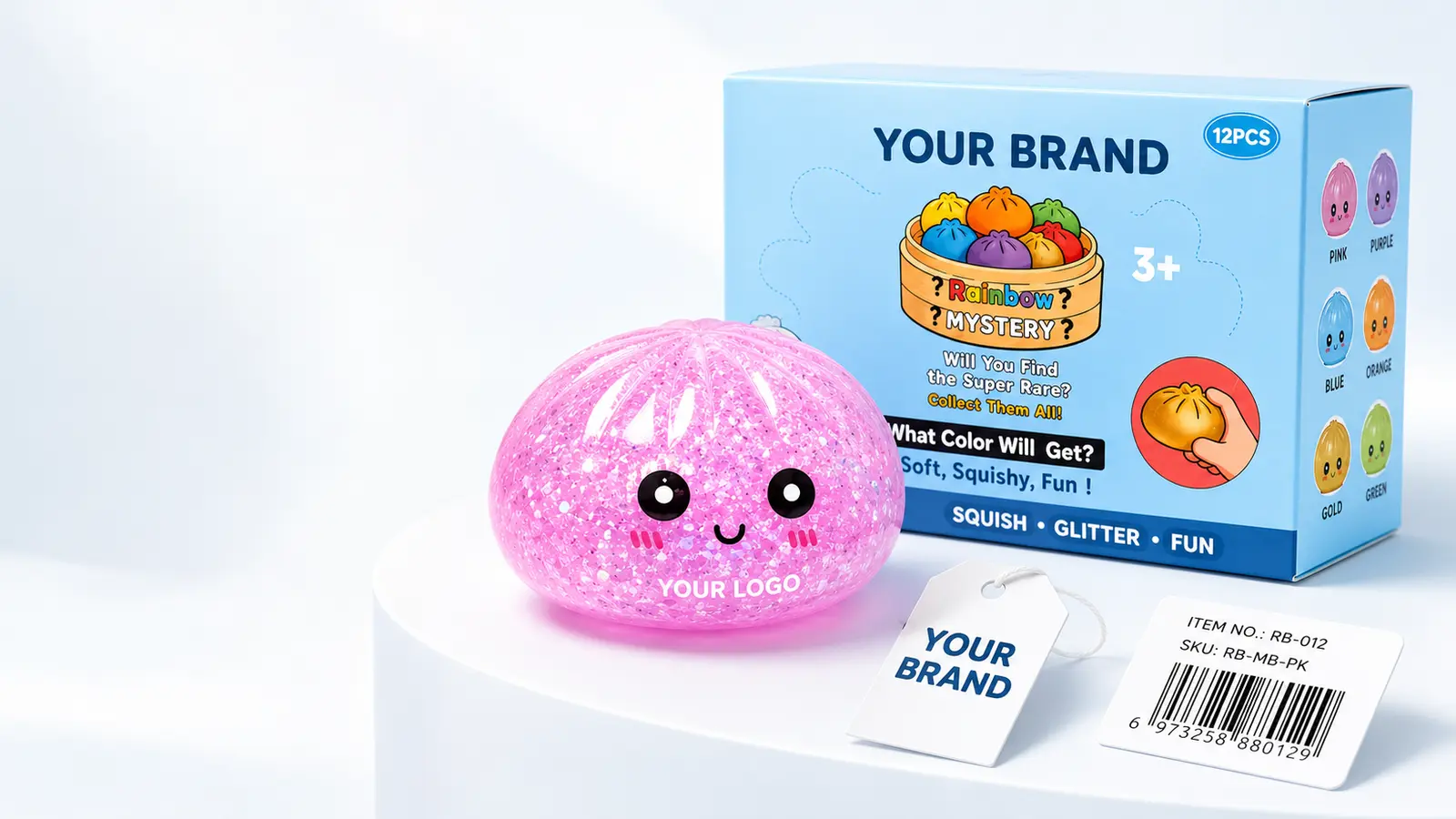
A drawing becomes a production-ready squishy when the visual idea is converted into a measurable brief, a physical sample and a locked revision. Define the shape, size, construction, colours, decoration, package and destination before the first sample.
On this page
Design-to-sample baseline
| Decision | Record | Why it matters |
|---|---|---|
| Identity | Drawing, front/side views, fixed facial features | Prevents proportions drifting |
| Construction | PU foam, TPR with filling, silicone or another approved build | Sets weight, squeeze and recovery |
| Physical limits | Size, weight, unsupported details and tolerance [Factory confirmation] | Shows whether thin parts survive production |
| Retail unit | Bag, card, box, warning, barcode and carton marks | Controls shelf fit and market information |
Start with a complete visual brief
Send the reference image with the finished size, sales channel, destination and target quantity. Mark features that must stay exact: silhouette, eye spacing, logo position, signature accessory and colour references. Mark adaptable features separately. Add a side view for tall ears, protruding noses, handles and details that affect mould release or package clearance.
Choose the construction before judging the drawing
PU foam creates a light integral body and gradual slow-rise feel. A TPR skin with flour, maltose, oil or another filling creates a denser, fluid or textured squeeze. Silicone gives a firmer durable surface. The same character feels like a different product when construction changes, so the brief should name the intended tactile experience.
Thin projections, deep undercuts and enclosed cavities may need adaptation. A thicker limb, rounded corner or supported base can preserve recognition while reducing tearing. The feasible wall thickness and support method for the selected construction are [Factory confirmation].
Decide whether the project needs a new mould
| Route | Best use | What changes |
|---|---|---|
| Existing shape plus branded pack | Fast campaign test | Artwork, label and package |
| Existing shape with colour or decoration change | Recognisable shape with new palette | Colour matching and print/paint setup |
| New character shape | Exclusive mascot or licensed design | 3D interpretation, mould and sample rounds |
If the sales story is mainly the logo or package, an existing shape usually gives a faster first launch. If the silhouette is the product, a new mould protects the character identity. Ownership, revision and exclusivity terms belong in the project record.
Review the first physical sample
Judge silhouette, colour and print, squeeze feel, recovery and package fit. Photograph the front, side, base, logo area and packed unit beside the sample code. For filled styles, press near seams and closures and look for leakage, oil film, powder lumps or a hard pocket. For PU foam, compare recovery in the same temperature and after the same squeeze count. The target recovery range is [Factory confirmation].
Lock revisions and the package
Use one revision number for drawing, colour proof, sample photos, package artwork and inspection notes. Measure the finished toy at rest and in its packed orientation. Keep warning, care copy, barcode and carton marks tied to the same revision. Food-shaped toys are not edible and should be kept away from young children.
Before bulk production
Release the order only when sample, specification, artwork, package and destination-market documents carry the same revision. Applicable test reports and label wording follow the exact construction and market: [Compliance confirmation].