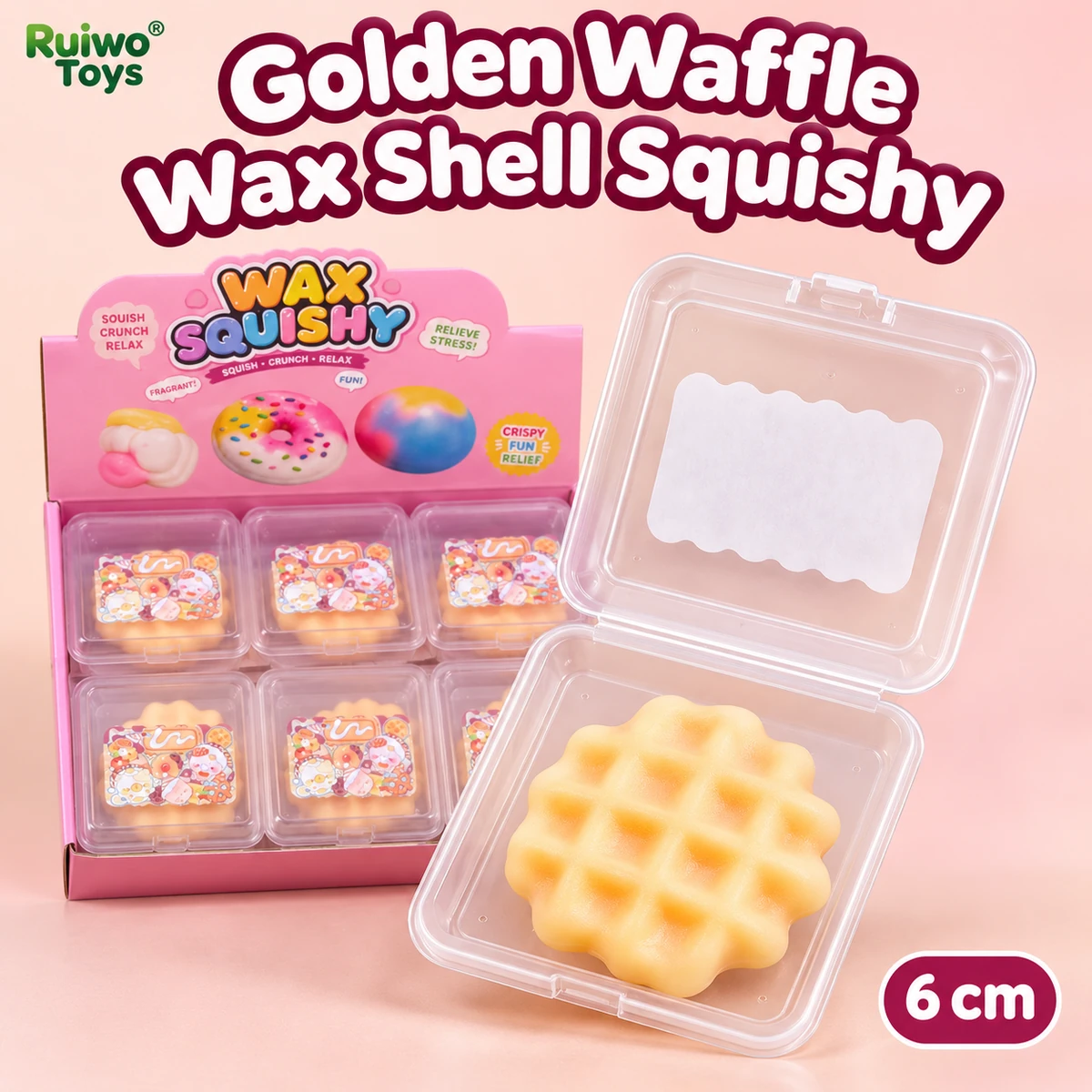
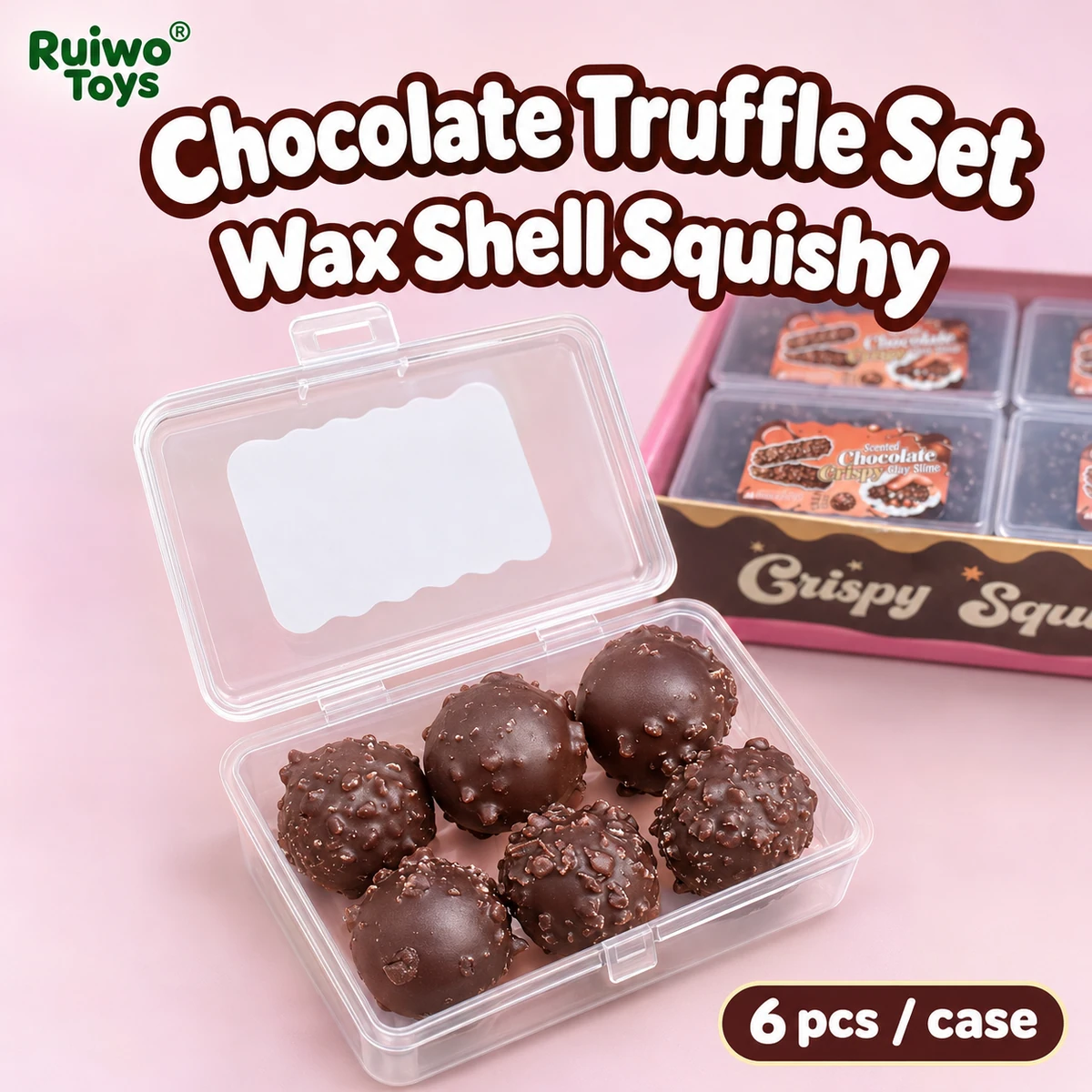
Classroom procurement facts
| School requirement | Sample check |
|---|---|
| Quiet desks | Listen while squeezing, releasing and opening the retail pack in a quiet room. |
| Shared handling | Request product-specific care instructions. Check the seam and surface after the proposed cleaning routine. |
| Individual rewards | Match the age marking, included pieces and packaging to the school’s purchasing policy. |
| Quantity tiers | For each stock SKU, 12–47 selling units qualify for 15% off and 48 or more qualify for 25% off. |
Stock wholesale orders start at 12 selling units per SKU. The product page identifies whether the unit is a piece or a set.

Choose a texture the class can use
The paste-filled cream roll, RUIWO-PJ-2309-093, offers a different squeeze from the slow-rise PU butter bar, RUIWO-N261114-100. Neither uses a mechanical switch. Compare both at the same desk and ask the teacher which sound and recovery time suit the room.
The flour burger RIVO-SEP10-011-02 has a kneadable filling. For an older group, compare the glitter maltose rose RUIWO-MT-2610-051 with the maltose game controller TRT-1025. A keyboard fidget clicker produces key feedback. Listen to the exact switch before including it in a quiet kit.
Prepare a sample record for purchasing
Write down the SKU, age marking, retail unit and cleaning method supplied for that item. Test a sample using the school’s routine and look for seam damage or a change in the finish. A toy’s texture alone does not establish suitability for therapy or for a particular age group.
For a US bid, start with the filled toy testing guide and request records for the exact model and market. Ask River on WhatsApp for a quotation split by texture and quantity.
Frequently asked questions
Which squishy textures should a school test for quiet use?
Start with a paste-filled TPR sample and a slow-rise PU sample. Listen at a desk during squeeze, release and handling. Check any mechanical clicker separately.
Can a school distributor mix textures in one wholesale order?
Yes. List each SKU and its selling quantity separately. Stock pricing applies per SKU at 12–47 units and again at 48 or more.