
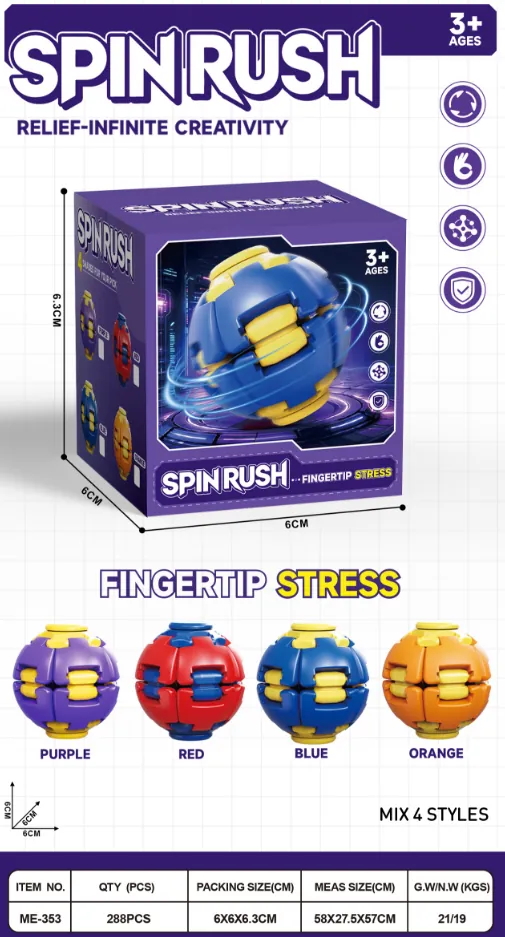
Compare push spinner quotes only after aligning the exact product version, quantity and included packing. Two offers with the same general name may cover different housings, features or selling units. The lowest visible unit price is useful only when you know what the buyer receives for it.
This guide is for a buyer reviewing competing or revised offers. It supplies comparison fields and an arithmetic example, not a current price list or a claim about which supplier is cheapest.
Describe the item before comparing amounts
Assign each candidate a reference containing the supplier's full SKU, current photograph, feature version and sample status. Retain suffixes and leading zeros. If the same supplier uses separate identifiers for standard and light-up versions, keep separate comparison rows.
Use the RUIWO push spinner catalog to start a shortlist, then request a dated quotation for the selected identities. A reference photo without an exact version can support an initial question but should not stand in for a final specification.
Normalize the quotation columns
| Comparison field | Question for each offer |
|---|---|
| Unit basis | Is the price per piece, set or display? |
| Quantity | Which exact SKU quantity qualifies for this price? |
| Product version | Which sample and feature specification does it cover? |
| Packing | Which individual pack and display components are included? |
| One-time work | Are artwork, setup or sample charges separate? |
| Delivery basis | What handoff point and transport costs are included or excluded? |
| Validity | When must availability and the offer be reconfirmed? |
Use “not confirmed” when an offer omits a field. An empty cell is not a zero charge. Ask the supplier to resolve missing information before the purchasing team ranks the offers.
Separate included costs from optional work
Hypothetical comparison: Offer A is 100 pieces at 1.00 currency unit each and includes the required individual packaging. Offer B is 100 pieces at 0.90 each, with that packaging separately quoted at 0.15 per piece. On those stated items alone, A totals 100 and B totals 105. Freight and any other charges remain outside this example.
This calculation does not establish the quality or total delivered cost of either offer. It only shows why the same packing scope matters. If one quotation includes a display and the other does not, obtain a matched offer instead of estimating the missing cost yourself.
Keep sample approval separate from price approval
A commercially attractive offer still needs a product decision. Use the press, return and rotation inspection sheet to document the selected sample. A brief demonstration does not establish an untested durability figure.
If you ask for a lower-cost revision, request a list of what changes. A different package may be acceptable; an unexplained change to the approved product needs its own review. Preserve both quotation versions so your team can see why the price changed.
Compare the order you can actually place
Confirm whether quantities may be mixed across styles or must meet a separate minimum for each selected version. Ask how the final cartons will be packed. A quote for a large single-style order may not describe the smaller mixed order you intend to buy.
Use the artwork approval guide if your comparison includes branding. Identify the approved packaging revision so a generic printed box is not mistaken for your custom artwork.
Record your final choice with the accepted quotation reference, sample reference and unresolved conditions. Send RUIWO the selected SKUs and comparison requirements to request an offer on the same stated basis.