
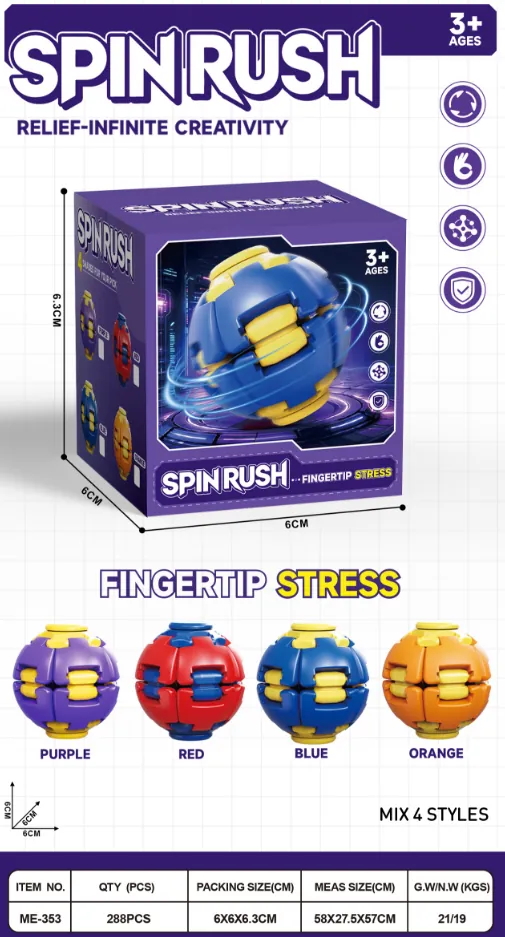
Check push spinner order readiness separately for the product and its final packaging. Available toys may still need approved artwork, printed packs or an agreed assortment before the order can be dispatched. Ask what is physically ready and what remains a plan.
This guide helps buyers distinguish a stock purchase from an order involving packing work. It does not assign a fixed production time. Availability, packing feasibility and dates need confirmation for the selected SKU and quantity.
Define the version you need available
Record the full spinner SKU, feature version, quantity and current sample reference. A statement that a product family is available does not show that your required version and quantity are available. Ask whether the quoted goods match the sample or whether a change requires review.
Use the push spinner catalog for identification, then confirm the current order-specific position. Do not treat a catalog photograph as a dated inventory count.
Separate the readiness stages
| Stage | Useful confirmation | Common open item |
|---|---|---|
| Product | Selected SKU, quantity and current condition | Availability of the exact version |
| Artwork | Named approved file and revision | Barcode, wording or placement approval |
| Packaging | Approved packed sample and available packing components | Printing or assembly still pending |
| Order assembly | Final style quantities and packing list | Assortment or count discrepancies |
| Dispatch | Agreed release and pickup arrangement | Final checks or transport confirmation |
A stage can be complete while the next stage remains open. Keep the person responsible and next update date beside every open item. That makes a readiness update more useful than a general message that the order is “almost finished.”
Choose standard or revised packing deliberately
If timing is tight, ask whether the current standard package meets your retail needs. Review its actual contents and presentation. Do not assume that a photo showing a box means that box is included in every quote.
If custom packing matters, define what is changing: artwork on an existing format, a new label, a display insert or a different box. Each proposal needs its own feasibility and quotation. The custom artwork guide explains the approval record; the readiness sheet tracks whether that approval and the resulting packing work are complete.
Work backwards from receiving needs
Give the supplier your required receiving date and distinguish it from the desired dispatch date. Ask for estimates for unfinished work and for the transport arrangement separately. Leave time in your plan for your own receiving and retail setup, based on how your operation actually works.
When an approval is late, request a revised timeline. Do not assume that compressing an internal deadline makes the original dispatch estimate achievable. If a fallback package is proposed, review the revised presentation and cost before accepting it.
Keep changes visible after approval
A change in artwork, selected feature version or style quantities can reopen a stage that was previously complete. Record the change and ask which downstream steps need revision. This prevents the original approval date from being used for a materially different order.
Before release, reconcile the current purchase order with the final packing list and approved package. Use the version-control checklist to distinguish the accepted configuration from earlier proposals.
Send RUIWO your spinner shortlist, packing preference and required receiving date. Ask for a staged readiness update so you can decide whether to keep the plan, simplify the packing or revise the schedule.