Quick answer
Check the material and the care instructions for the exact SKU before cleaning a squishy. Some filled TPR toys are meant to stay in their pouch, slow-rising PU foam should stay out of water, and a cracked wax shell can reveal either clay or foam. A care card should tell the customer which surface to clean, how to store the toy and when to stop using it. Never microwave, boil or otherwise heat a filled squishy.
A cleaning and storage guide by material
Two identical-looking butter bars can need different care after the first squeeze. Match the sample and its approved retail pack to the correct row before printing an insert.
On this page
| Construction | Routine care | What to tell the customer |
|---|---|---|
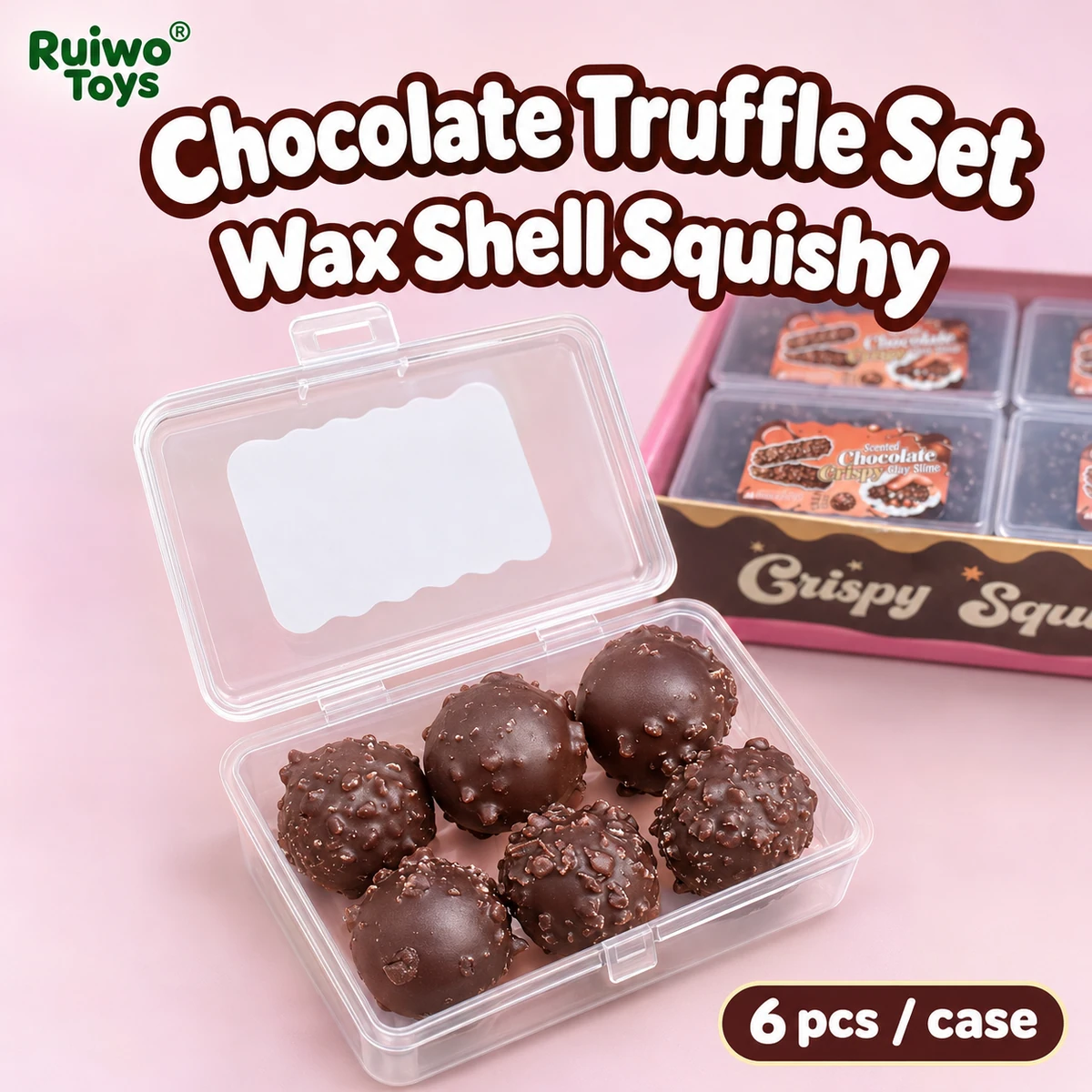
| Filled TPR shell with flour, maltose, paste, slush or internal block-clay filling | If supplied for in-pouch play, keep it in its pouch. For an exposed toy, follow the SKU instructions. If surface wiping is permitted, use a clean soft cloth and let the surface dry fully before storage. | Keep lint and sharp objects away from the shell and seams. Use soap or rinse under water only if the instructions for this item allow it. |
| Uncoated slow-rising PU foam | Lift dust with a soft dry cloth. If the finish permits a barely damp cloth, wipe gently and let the surface dry. | Keep the foam out of water. Avoid wringing, scrubbing printed details or stretching wet foam. |
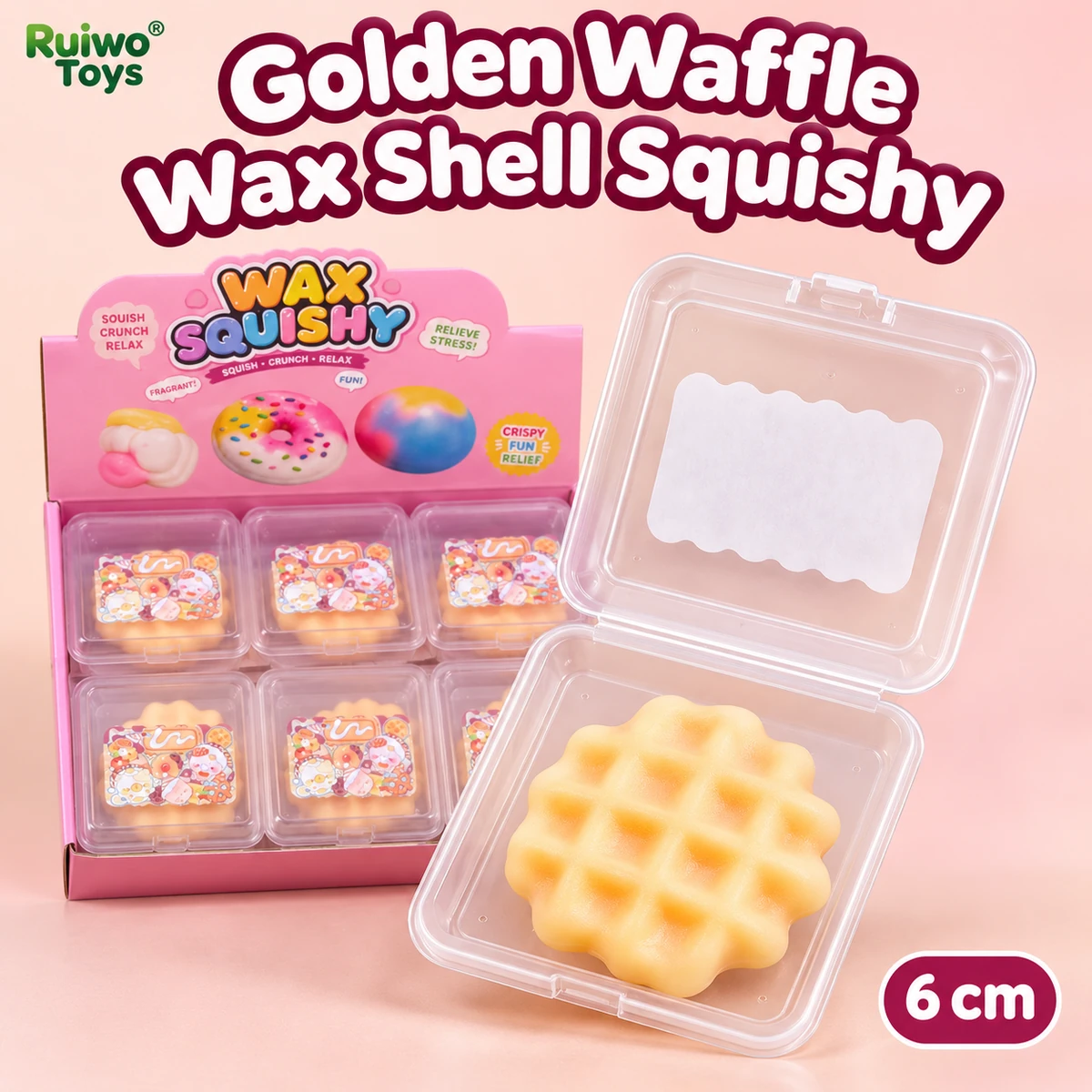
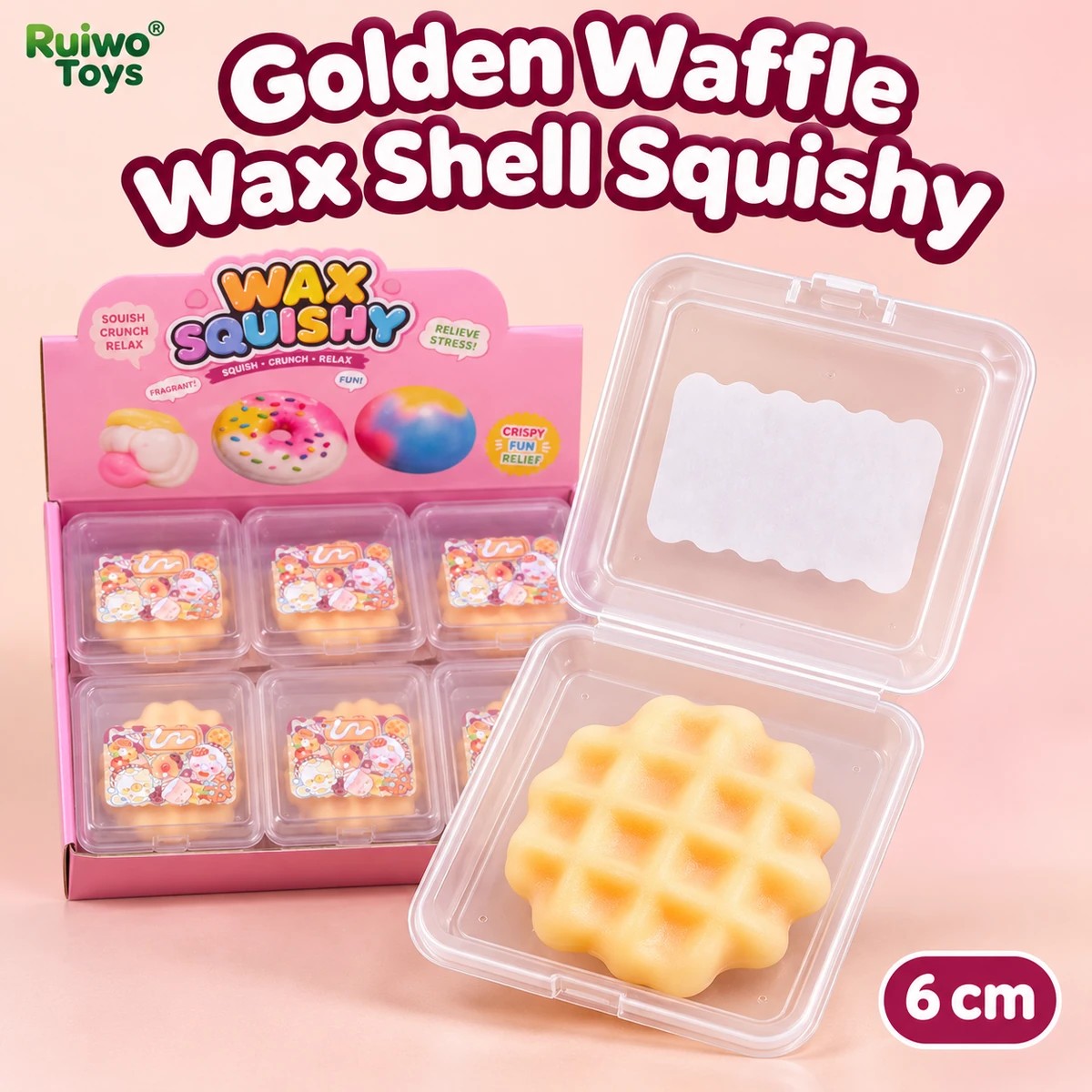
| Wax shell over a clay core, such as the Golden Waffle GLA-007 | Follow the pack directions for the first crack. Catch the loose wax in the supplied pouch or tray. Seal the exposed clay in its designated container after play. | The shell breaks on the first use. Keep the clay and its packaging dry and away from heat. |
| Wax shell over slow-rising PU, such as the Strawberry Butter Bar GLA-046 | Catch the wax as directed on the pack. Keep the inner foam dry and store it away from sharp items. | The wax cracks once. Subsequent squeezes compress the foam core. |
Compare the two wax constructions before choosing the insert. Golden Waffle with clay core and Strawberry Butter Bar with PU core.
What to do when a TPR or sugar-ball squishy feels sticky
- Check the shell first. Ask for the SKU and a photo of the seam. If filling is visible, the shell has split or the surface is deteriorating, stop use and contact the retailer. A cleaning tip cannot repair a leak.
- Check the intended surface. For in-pouch styles, clean or replace the outer pouch as the supplier directs. For a bare-hand style, follow its approved cleaning method, allow it to dry and store it separately from paper, lint and dusty surfaces. Use a powder treatment only if the maker specifies it for that exact finish.
- Let a cold delivery settle. Maltose filling can feel firmer after cold transit. Let the closed item return to room temperature on its own and compare it with the approved sample before treating firmness as a defect. An example is the 11.5 cm maltose game controller, TRT-1025.
A heat warning customers can act on
Put the heat warning where a buyer will see it before opening the pack. Heating a filled toy can rupture the shell and release hot filling that can burn skin. Keep the toy out of microwaves, boiling water, hot cars and direct heat. Print the age grade and warnings approved for the specific product and destination. U.S. Consumer Product Safety Commission burn alert and U.S. squishy toy safety guide.
Copy-ready retail care card
Print the first line and the line for your SKU. Add its approved age grade, required warnings and your store contact before sending the card to print.
- For every pack. Toy only. Do not eat. Never microwave, boil or heat. Keep away from sharp objects. Stop using the toy if it splits or leaks.
- Filled TPR. Keep in the supplied pouch if indicated on the pack. Follow the printed cleaning directions, allow the surface to dry and store away from lint.
- Slow-rising PU. Gently wipe the surface as directed. Keep the foam dry. Do not soak or wring.
- Wax-coated clay or foam. Catch the wax in the supplied pouch or tray. Reseal a clay core after play. Keep a foam core dry.
For staff training, pair this card with the filling materials guide and the returns and quality complaints guide. For a suspected seam failure, use the factory quality control checklist. To quote printed cards, choose styles from the wholesale catalog and send the artwork and quantity to River on WhatsApp. Ready-stock minimums and custom printing are quoted separately.
Frequently asked questions
How do I remove lint from a sticky TPR or sugar-ball squishy?
Check whether it is designed for in-pouch play. For exposed TPR, use the cleaning method approved for the SKU and let it dry fully. Apply powder only if the manufacturer specifies it. Stop use if the surface is damaged or leaking.
Can I wash slow-rising PU foam under the tap?
Keep the foam out of water. Use a soft dry cloth for dust, or a barely damp cloth if the SKU instructions permit it. Let the surface dry without squeezing or wringing it.
Why put a “Do not microwave” warning on the pack?
Heating a sealed squishy can cause it to burst and release hot filling. If it feels firm after a cold delivery, let it return to room temperature on its own.
Can Ruiwo supply custom care cards for a wholesale order?
Send the SKU list, artwork, language and order quantity for a printing quote. Ready-stock styles start at 12 sales units per style. Printed cards and private-label packaging have project-specific minimums.