
Read this article in another language
Short answer: Links refer to this article. Existing localized editions may differ from the source. Unavailable languages are not translated pages.
A custom squishy souvenir should connect to something visitors remember about your museum or attraction. Start with that connection, then compare an existing shape with venue branding against a newly developed shape. The right choice depends on the design, purchasing budget, sample approval work and how the shop will sell the finished item.
On this page
This guide is for museum shops, visitor attractions and souvenir buyers planning a new range. It describes a proposed buying process, not a completed RUIWO museum project. A catalog photograph can help explain a starting shape; it does not prove that a custom version has been developed or approved.
Choose one part of the visitor experience to represent
Write a short sentence explaining why this object belongs in your shop. It might reference a local food tradition, a venue character or an exhibition theme. Choose an idea that visitors can recognise at a glance and that your team can explain without a long label.
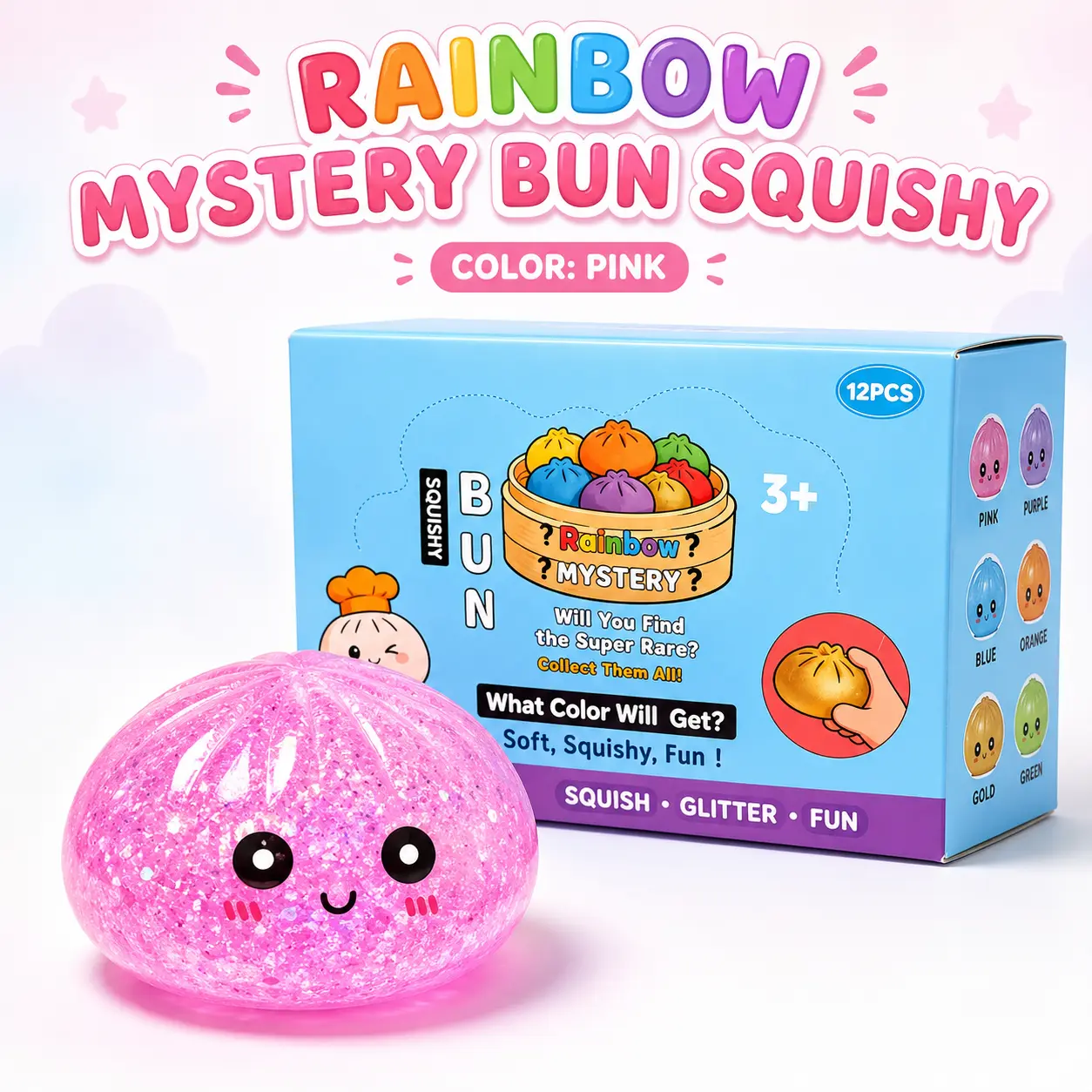
For example, a hypothetical food-history attraction could compare a current bun-shaped toy in venue-branded packaging with a new shape based on its own illustrated character. Neither option should be presented as feasible until the supplier reviews the actual brief. The existing-shape option and the new-shape option need separate scope and sample decisions.
Use artwork your organisation is authorised to supply. Give the designer clear reference files and identify which features define the character. A photograph of another retailer's souvenir is a visual reference, not a production-ready design.
Compare two development routes before commissioning artwork
| Decision | Existing shape with venue branding | New custom shape |
|---|---|---|
| Design question | Does the shape already communicate the venue story? | Which features must survive the move from drawing to object? |
| Supplier review | Confirm available branding positions and package options for the exact SKU. | Request a feasibility review of shape, construction and development stages. |
| Quotation scope | Separate toy, branding, packaging and sample charges. | Separate development, revisions, samples, tooling if applicable and production. |
| Approval evidence | A packed sample with the correct toy and venue artwork. | An identified approved product sample plus its finished packaging. |
Do not decide from a mockup alone. A convincing image may leave unanswered questions about dimensions, decoration, feel or how the item sits in its package. For the broader branding choices, see the custom logo and packaging guide.
Build the brief around the actual gift shop
Record the intended audience, destination market, proposed retail selling unit and where the product will be displayed. Measure the available shelf or display space. Ask whether staff need to hang individual packs, refill an open display or sell a sealed souvenir set. These are buying inputs, not instructions to remove protective packaging.
Include the proposed retail price as a planning target, without treating it as an accepted supplier price or a margin guarantee. Request separate quantities and quotations for each design route. Keep any launch date linked to an agreed sample and delivery plan rather than assuming that the exhibition opening date can be met.
A useful creative brief contains the venue name, authorised artwork, one-sentence visitor story, must-have design features, optional features, target audience, packing format, order quantity range, delivery location and the person authorised to approve changes.
Review a sample as both a product and a souvenir
Ask your team to review recognisability, wording, actual size, packaging fit and the accuracy of the displayed product image. Have someone who did not prepare the artwork identify which venue or theme the item represents. Record unclear elements before approving print files.
Keep product safety and intended-age assessment separate from the creative review. A recognisable character or attractive package does not establish suitability for a particular age group. Confirm the required evidence for the final product and market with the responsible reviewer.
Photograph the approved sample and retain its version identifier. If the shape, filling, decoration or package changes later, identify which approvals need to be revisited. Use the private-label pre-production checklist for the wider order controls.
Plan what happens after the exhibition or season
Before buying dated packaging, ask whether remaining stock can still be sold after the event. A permanent venue identity and a removable event-specific component may be worth comparing, if the supplier confirms feasibility. Include the cost and work involved in either route; do not assume leftover packaging can be reused unchanged.
Keep a reorder record with the approved files, SKU, selling unit and sample reference. Review actual shop sales before adding more designs. A souvenir that works in one venue should not automatically become the quantity forecast for every branch.
Prepare your custom souvenir enquiry
Browse the current squishy toy catalog to identify possible starting shapes, then send an enquiry with your venue story, design files, quantities and destination. After submitting, use the WhatsApp button with your enquiry number to discuss photos and development scope. Pricing, minimum quantities and timing need confirmation for your specific brief.