
Read this article in another language
Short answer: Links refer to this article. Existing localized editions may differ from the source. Unavailable languages are not translated pages.
A capybara squishy can give an animal-themed display a clear starting point. For a retailer, the useful question is how that character works alongside the rest of the range. Shape, size, tactile response and packaging all influence whether shoppers see meaningful choices or several products that feel almost identical.
On this page
Build the collection around a few distinct buying reasons. One customer may prefer the animal, another the feel, and another a gift that fits a particular budget. Your assortment should make those differences easy to understand before you increase the number of styles.
Give each animal a clear role
Begin with one featured character and a small number of alternatives. A rounded capybara, an elongated crocodile and a dinosaur silhouette can create visual variety without requiring a large display. This is an assortment idea, not a prediction that one animal will outsell another.
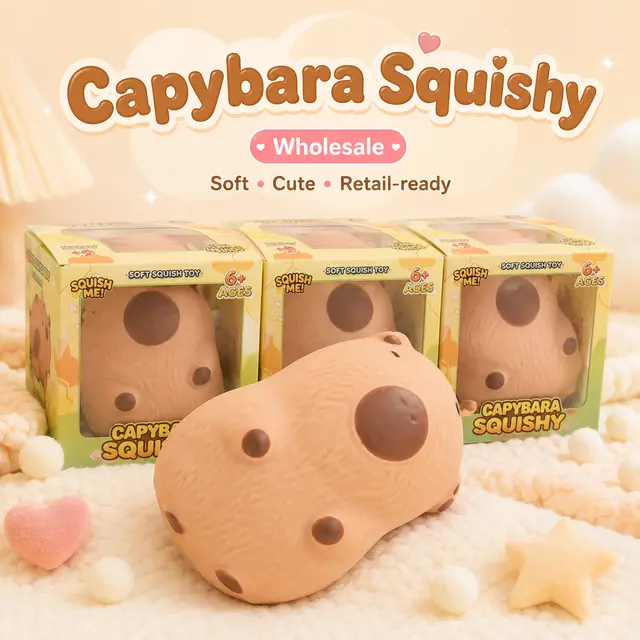
RUIWO lists a Capybara Squishy alongside other animal squishy toys. Use the catalog to identify candidates, then compare their current samples. A shared animal theme does not establish that different products use the same construction or behave the same way when pressed.
Write one sentence explaining why each proposed style belongs. If two styles have the same visual role, size and feel, consider testing one first. Keeping the initial collection focused also makes customer feedback easier to interpret.
Compare the whole retail experience
Inspect the character from the angle customers will actually see. A face that looks clear in a close-up may disappear behind a high display-box wall. A distinctive silhouette may be easier to recognize when the package holds the product upright.
Record the following for each candidate:
- The visible character and the selected color or finish.
- The physical size, unit weight and finished package dimensions.
- The pressing and recovery behavior of the current sample.
- The amount of shelf space needed to show the product clearly.
- The exact selling unit and the quantity available to order.
Compare samples under similar conditions. Let staff describe what they observe in everyday language before writing customer-facing copy. Words such as soft, firm or slow to recover should describe the selected product, not the whole animal collection by default.
Test the assortment without confusing the result
Give each style a fair opportunity to be seen. If the capybara sits at eye level while the alternatives remain in a carton, the sales comparison will tell you more about placement than customer preference.
For an illustrative trial, a shop might allocate 12 pieces to each of three styles, subject to the supplier's confirmed order quantities. The resulting 36-piece plan is an example, not a RUIWO minimum order or standard pack. Record the date each style went on display, the days it was available and any promotion used.
Ask staff to note specific requests. “Do you have another animal with this same feel?” suggests an opportunity to extend the character range. “Do you have a softer version?” points toward texture. Those two requests should lead to different buying decisions.
Keep the collection easy to replenish
Retain a supplier SKU and a photo for every selected variant. Animal names alone are weak reorder references because similar characters can appear in different sizes, finishes and constructions.
When a style performs well, confirm that the repeat offer matches the approved sample and packaging. Expand one variable at a time where possible. Adding a second character with a familiar feel produces a clearer comparison than changing the character, size and package together.
Should every animal have the same quantity
Equal starting quantities can make a small comparison easier, but they are not a permanent buying rule. Later orders should reflect availability, actual sales, shelf space and confirmed supplier packing requirements.
Does a catalog image prove the final product specification
No. Use the image to identify a style. Approve the current physical sample and written details before relying on material, size, texture or packaging claims.
To discuss an animal collection, contact RUIWO on WhatsApp with your shortlisted products, destination country, sales channel and intended quantity per style.