
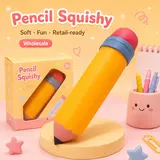
Stationery stores, bookstores and lifestyle retailers increasingly mix practical products with small gifts, desk accessories and impulse-purchase novelties. Squishy toys can fit this environment when the size, theme and packaging are selected for compact retail displays rather than a traditional toy aisle.
The strongest assortment is usually not the largest possible toy. It is a product that looks interesting beside notebooks, pens, stickers, keychains and small gifts while using limited shelf or counter space.
Choose desk-friendly and giftable sizes
Stationery retail often has dense merchandising. Large products can use too much space, while very small products may not feel valuable enough.
Ask for exact dimensions and compare them with the intended fixture:
- Counter tray
- Peg hook
- Small shelf
- Checkout display
- Gift table
- Back-to-school display
A compact product with a clear shape can be easier to merchandise in this channel than a large squishy designed for a toy store feature wall.
Use the wholesale squishy toy catalog to shortlist products by shape and size before requesting samples.
Use themes that connect naturally with stationery
Some shapes fit the environment more naturally than others. Useful theme groups include:
- Pencil and school motifs
- Food and cafe themes
- Fruit
- Cute animals
- Minimal cubes or geometric designs
- Pastel/rainbow assortments
- Seasonal gift themes
The goal is not to force every product to look like stationery. Instead, choose products that feel compatible with the store’s existing visual language.
A pencil squishy can sit directly beside pens and pencil cases, while dessert or fruit designs can work in a broader gift section.
Build a compact mixed display
A stationery retailer may not want a full shelf of one design. A mixed display can create stronger visual variety in a small area.
For a counter program, define:
- Number of facings
- Units per design
- Display footprint
- Refill quantity
- Whether the display is supplied by the factory or built by the retailer
A small counter box with multiple designs can make replenishment easier than individual shelf placement. However, the box dimensions should be approved in advance so it does not consume too much checkout space.
See the display box guide for pack-out and merchandising considerations.
Keep packaging visually clean
Lifestyle and stationery stores often care about presentation. Packaging should not overwhelm the product.
Depending on the retail concept, suitable options may include:
- Clear bag with small label
- Header card
- Minimal hang tag
- Small box
- Counter display with individually packed units
A full-color retail box is useful only when it supports the price point and brand presentation. For a smaller impulse item, a simple clean pack can look better and cost less.
If the retailer wants private label, compare logo stickers, custom cards and boxes in the custom packaging guide.
Think in price ladders rather than one price point
A stationery store can use multiple squishy sizes to create a simple price ladder:
- Entry-level small impulse item
- Mid-size core product
- Larger giftable hero product
This lets the buyer test the category without forcing every customer into one retail price. The exact wholesale price depends on SKU, material, packaging and quantity, so compare complete specifications rather than generic size labels.
Use the wholesale price tier guide to understand how quantity and packaging can affect the quotation.
Add seasonal color stories without rebuilding the entire range
Stationery and lifestyle stores frequently refresh displays by season. Squishy toys can participate through color and theme rather than requiring a full new program.
Examples:
- Pink/red for Valentine-style gifting
- Fruit/tropical designs for summer
- Warm bakery colors for autumn
- Ghosts/pumpkins for Halloween
- Snowmen/reindeer for Christmas
Keep evergreen desk-friendly products as the base, then rotate a smaller seasonal layer.
Avoid exaggerated claims in sensory merchandising
A squishy toy can be described by its physical characteristics, such as soft, squeezable, slow-rising or filled, when those descriptions match the actual product. Retailers should avoid unsupported medical or therapeutic claims.
For buyers, the safer product selection process is to focus on:
- Material/filling
- Size
- Squeeze feel
- Recovery
- Surface finish
- Packaging
- Intended age grading and market requirements
Confirm testing and labeling for the exact product and destination before sale.
The toy compliance document checklist provides a practical starting point for document review.
Sample products beside the real stationery assortment
Do not approve the squishy in isolation. Place it beside the notebooks, pens, stickers, gift items or counter fixtures where it will actually be sold.
Ask:
- Does the product look too childish or too large for the store?
- Does the color palette fit the surrounding merchandise?
- Is the packaging easy to hang or stack?
- Does the retail price feel consistent with nearby gift items?
- Can staff refill the display quickly?
This simple visual test can prevent a technically good product from feeling out of place in the store.
Use mixed-SKU orders for first category tests
A retailer adding squishies for the first time should usually test several shapes rather than committing heavily to one style before sales data exists.
A trial assortment can combine:
- 2–3 stationery-adjacent designs
- 2–3 food/fruit styles
- 1–2 animals
- 1 seasonal or unusual hero product
Track sell-through by SKU. Reorder the styles that fit the store rather than assuming the most viral online product will also be the best stationery-store seller.
The mixed-SKU order guide article is currently part of Ruiwo’s buyer content library and can be used alongside the mixed-SKU planning process when published.
Confirm carton and display dimensions before shipping
Small retail stores often have limited back-room storage. Ask for carton data early so the buyer knows how much inventory space the order will use.
Important data includes:
- Units per inner box
- Units per carton
- Carton dimensions
- Gross weight
- Display-box quantity if used
A compact, well-structured carton can be more useful than a slightly cheaper product packed inefficiently.
Ask Ruiwo for a stationery-store assortment
If you sell through stationery, bookstore or lifestyle retail, send Ruiwo Toys your target product size, retail price range, quantity, display type and preferred themes. We can shortlist current squishy SKUs, prepare a mixed sample plan and provide packaging and carton data for the assortment.