
Read this article in another language
Links refer to this article. Existing localized editions may differ from the source. Unavailable languages are not translated pages.
Review a squishy toy trial order by exact variant, using sales and available stock over a defined period. Before buying again, check whether a strong result reflects normal demand or a temporary promotion, and whether a weak result reflects poor demand or simply limited time on display.
On this page
This worksheet is for buyers who already received a small assortment. It does not predict a bestseller or promise a sales rate. Its purpose is to turn your own trial records into a clearer decision about the next purchase.
Choose a comparable review window
Record when each variant became available for sale, not just when the shipment reached your warehouse. A toy held back for photographs or labels has less selling exposure than one placed on the counter immediately. Keep online and store results separate where the selling conditions differ.
Start with a fixed review period that suits your operation, and retain the actual number of available selling days for each item. There is no universal number of days that proves a new squishy range will succeed. A seasonal item also needs a decision date early enough for any feasible replenishment.
Build a trial record at variant level
| Record | What to capture |
|---|---|
| Identity | Supplier SKU, selected size/color and retail selling unit |
| Supply | Opening sellable stock and receipts during the period |
| Movement | Units sold, returns, giveaways, damage and transfers separately |
| Exposure | Available selling days, store placement or listing status |
| Price context | Actual selling price and promotion dates |
| Decision | Repeat, extend trial, revise presentation or pause purchasing |
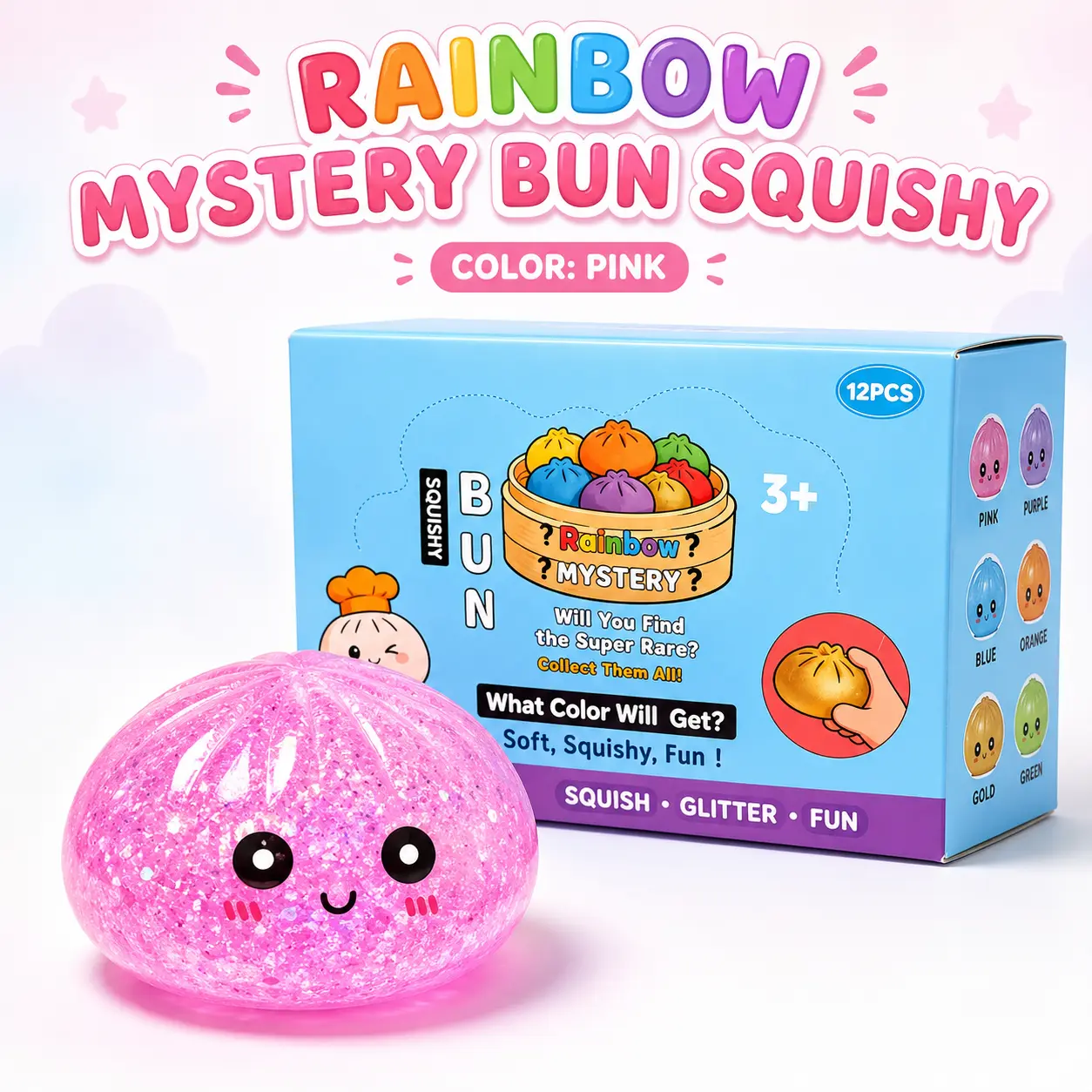
Keep the two sizes on the Rainbow Mystery Bun page in separate rows if you sell both. Combining sizes under one name hides which version generated the result. Use your own retail records for sales; supplier catalog popularity is not a substitute.
Calculate sell-through with an explicit definition
For a simple trial with no transfers, define trial sell-through as units sold during the period divided by opening sellable units plus sellable receipts during the period, multiplied by 100. Record returns separately in this version of the worksheet; if you use net sales instead, label that definition and apply it consistently.
Illustrative example: a variant starts with 24 sellable units, receives no more and sells 9 during the review. Sell-through is 9 ÷ 24 × 100 = 37.5%. If two further units were used as samples, they are sample usage, not customer sales. The remaining physical stock is 13, assuming no other movement. These numbers are invented to explain the calculation.
When the denominator is zero, mark the rate unavailable. If an item was out of stock, record those days. Dividing sales by the whole calendar period can understate the sales pace while the item was actually offered, but a short in-stock period can also give an unstable estimate.
Explain the result before increasing quantities
Look for practical explanations: one style had a demonstration sample, another stayed behind packaging; one listing had clear size photographs, another was incomplete; a discount ran only on one SKU. Correct obvious presentation problems before interpreting the result as a permanent customer preference.
Separate units sold from the money retained. A heavily discounted item may move quickly while leaving little room for the next order. Use the retail pricing worksheet alongside the sales record. Avoid treating purchases made by friends or staff as representative demand without noting that context.
Turn the review into a buying decision
For repeat candidates, request current availability, the exact version, order increment and packing details. For uncertain items, set a new question for the next trial instead of automatically repeating every style. For paused items, document why so that a later buyer does not restart the same experiment without context.
Check existing stock and inbound orders before setting a quantity. The reorder planning guide covers the next purchasing record. If a seasonal deadline has passed, a good historical sales rate alone does not justify replenishment.
Send RUIWO your shortlisted SKUs and proposed quantities. You can share an anonymized trial summary if you want to explain why the next assortment differs from the first.