
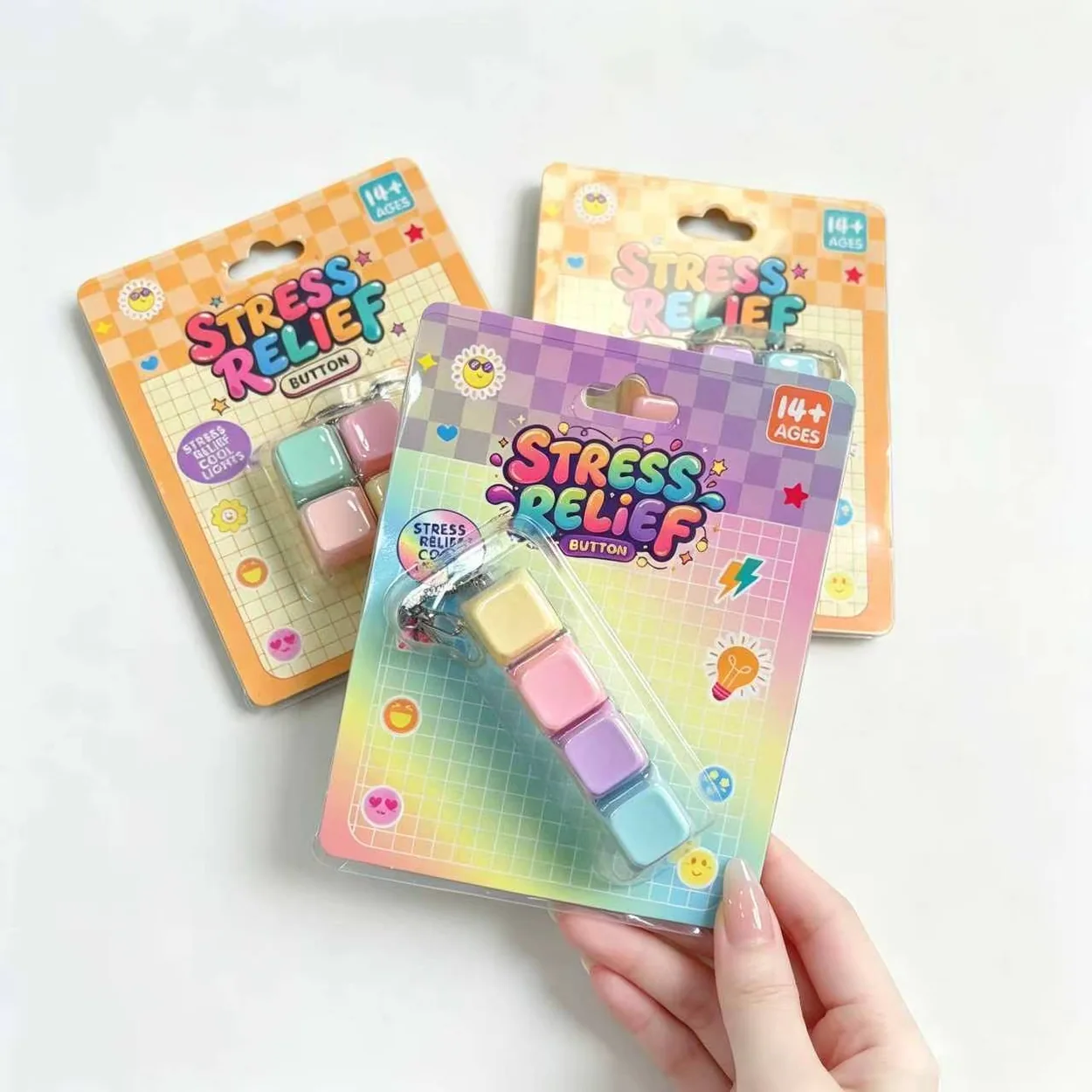
A fidget keychain has two jobs: its tactile action must work as described, and its attachment and retail package must suit the way the item will be displayed and handled. Checking only the keys can miss a weak presentation or an attachment arrangement that makes the product awkward to use.
For a wholesale buyer, review the complete assembly: toy body, attachment point, ring or chain if included, and the final retail card or package. The RUIWO fidget keyboard catalog contains keychain and retail-card references, but the exact included parts must be confirmed by SKU.
Record the complete set of components
Photograph the sample from the front, back and attachment side. List what is included. Distinguish a keyring, short chain, clip or other accessory rather than treating all attachments as interchangeable.
Confirm the connection method to the body and whether the accessory is included in the unit price. An image with a decorative accessory does not establish that it is part of the shipped selling unit.
Use the Retail Card 4-Key Fidget Keyboard Keychain as a catalog reference for a packaged format. Ask for the exact current card and attachment assembly before treating the image as a production specification.
Check normal handling and access to the keys
Hold the product in the way a customer would use it. Check whether the chain crosses the keys, whether the ring catches on the body and whether the attachment makes it difficult to press the buttons.
Observe the attachment point and accessible edges during normal sample handling. Record visible gaps, deformation, roughness or unexpected movement for review. If retention strength is a formal buying requirement, agree an appropriate test method and supporting evidence with the responsible specialist.
Do not invent a pull-force threshold or describe an informal hand check as a safety test. Similarly, do not promise detachable or replaceable keys unless that feature is documented for the selected version.
Test the loaded retail card
Hang the packaged sample on the intended fixture. Check whether the card tilts, the product covers the title, or the ring protrudes into neighboring stock. Measure the complete hanging unit, including parts extending below or beyond the card.
Look for these practical issues:
- The hanging opening works with the retailer's fixture.
- The product remains in the approved position.
- Printed product information is visible.
- The package can be removed from the hook without snagging nearby units.
- Keys are not held down by the packaging arrangement.
Do not solve a poor fit by using an unapproved fastening method that changes the product or hides information. Ask for a revised package sample and record that version.
Decide whether customers can try the product
A retailer may want a demonstration unit while keeping sale stock sealed. If so, identify the demo separately and explain how it is maintained under the product's actual care guidance.
If the package deliberately exposes keys for trial, review the product after normal retail handling and ask whether the format is appropriate for the intended channel. An open presentation can change both appearance and how staff manage stock.
The clicky-versus-quiet sample guide helps with the sound comparison. Attachment and card approval should still be recorded separately from the preferred click experience.
Carry the approved assembly into fulfillment
Save the SKU, product variant, attachment description, card version and photographs together. Receiving staff should be able to identify whether a shipment matches the complete sample, not just the front color.
Keep packaging and accessory substitutions subject to written approval. A different ring or a larger card can change the hanging footprint even if the toy body stays the same. If products are sold online, update the images and included-parts description for the version being fulfilled.
The custom fidget branding guide covers artwork questions. This checklist addresses whether the resulting physical unit can be displayed and handled as intended.
Ask for a complete-unit quotation
Provide RUIWO with the exact keychain reference, intended fixture, card size constraints, included attachment requirements, quantity and destination. Ask for current packaged samples, finished-unit dimensions and quotation details.
Request a fidget keychain quote after defining the whole assembly. That makes it easier to compare two offers that otherwise look similar in a front-facing product image but include different hardware or packaging.